

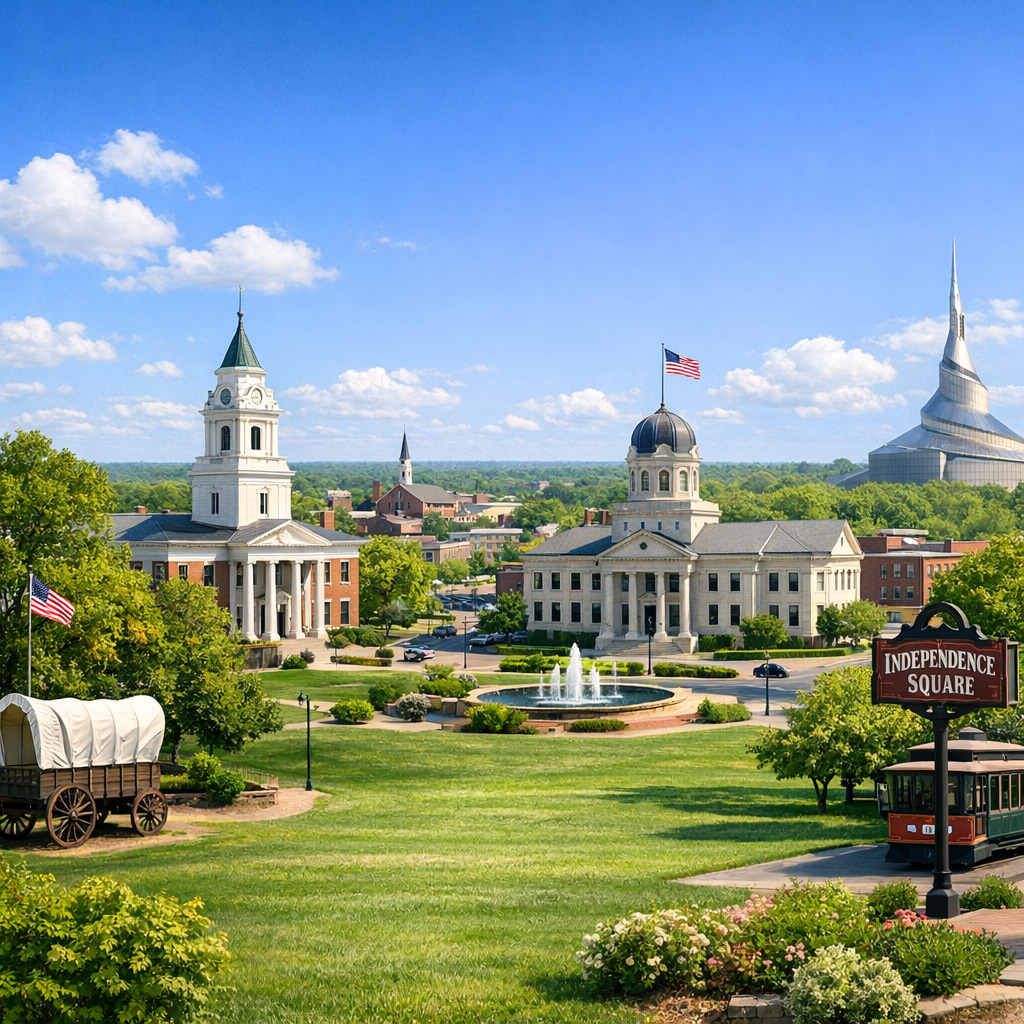
Independence, Missouri, experiences a humid subtropical climate characterized by hot, humid summers and cold, snowy winters. Understanding these patterns can help residents and visitors prepare for the varying conditions throughout the year.
Seasonal Temperature Variations
During the summer months, temperatures in Independence often rise above 79°F (26°C), with July being the hottest month, averaging a high of 89°F (32°C) and a low of 71°F (22°C). The winter season brings colder conditions, with average daily high temperatures below 49°F (9°C) from late November to late February. January is typically the coldest month, with an average high of 39°F (4°C) and a low of 21°F (-6°C).
Precipitation and Humidity
Rainfall is fairly evenly distributed throughout the year, with May being the wettest month, averaging 5.73 inches (145 mm) of precipitation. Humidity levels remain relatively consistent, averaging around 66% annually. The combination of high humidity and warm temperatures during summer can lead to muggy conditions, while winter months often feel colder due to the damp air.
Wind Patterns
Wind speeds in Independence vary seasonally. The windiest months are February, March, and April, with average wind speeds of 9.8 mph (15.8 km/h). August is typically the calmest month, averaging 6.3 mph (10.1 km/h).
Environmental Considerations
Independence faces environmental challenges related to climate change. Projections indicate an increase in the number of extremely hot days and a higher percentage of annual precipitation occurring during heavy downpours. Additionally, about 80% of buildings in Independence are at risk of wildfire, and approximately 12% are at risk of flooding. Residents are encouraged to stay informed about these risks and take appropriate measures to mitigate potential impacts.
By understanding the local climate and environmental factors, the community can better prepare for seasonal changes and contribute to the resilience of Independence.